



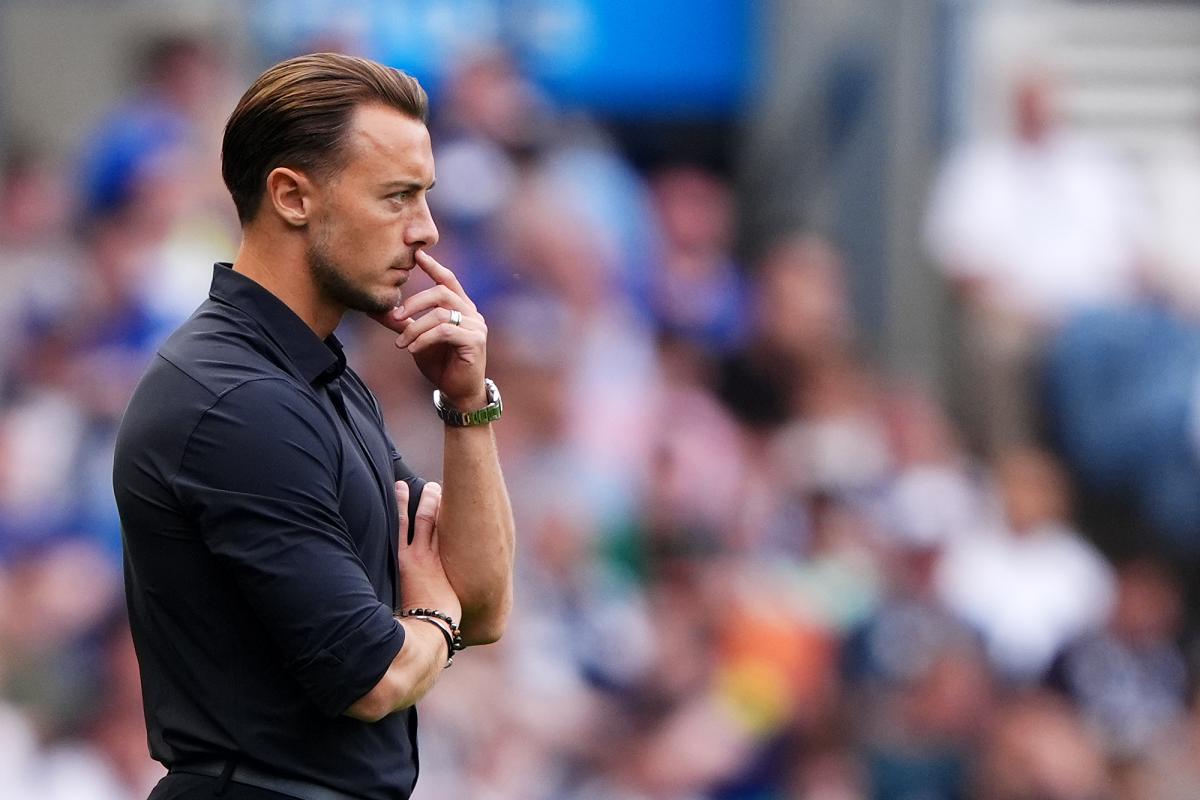
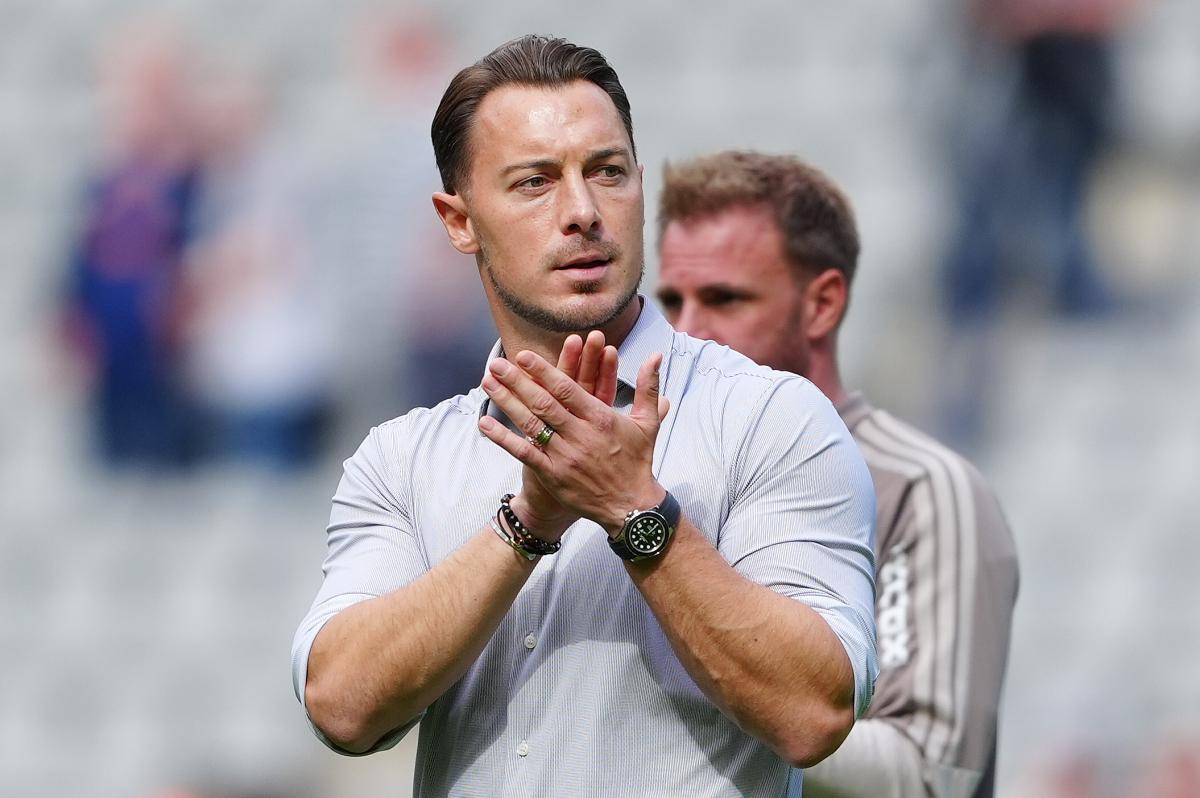

SOMETIMES, a head coach’s career follows an extremely smooth path. Star youngster, star senior player, star coach. You start at the top and stay there.
For others, though, the journey is not so straightforward. As he sits in his office at Newcastle United’s refurbished KNOX training complex, plotting his way through the international break, Matthias Jaissle can take justified pride at having secured one of the plum coaching roles in world football. Ask him to reflect on the road that has brought him to Tyneside, however, and it quickly becomes clear that there have been plenty of twists and turns along the way. Not least, when he was just five years old.
“I had a tumour, when I was five years old, in my neck,” revealed Jaissle, in his first in-depth interview since being appointed as Newcastle’s head coach in the summer. “I couldn’t move my neck side to side, and I learned a lot.
“I was only five years old, but I learned a lot about life already. How important it is to be healthy, and how grateful you can be to be healthy and to follow your dream. It was not clear I would be able to play football at that age.”
Having made a full recovery after the tumour was removed, Jaissle spent the rest of his childhood, near to Nurtingen, a small town in Baden-Wurttemberg in southern Germany, falling in love with the game. His talent was quickly obvious, earning him a move into the academy set-up at Stuttgart, one of Germany’s most successful and storied clubs.
“I grew up in a small village, so everything was nice, settled, calm,” said Jaissle. “Then I went to a bigger city at the age of 14 or 15, when it was about to be clear that football could be a big part of my life. I joined Stuttgart. Coming from a little village, it was a huge step into the academy of Stuttgart.
“I got inspired because I was standing in the curve in the stadium as a youth kid and cheering for Stuttgart. I was like a passionate fan really. Then, seeing the lads on the pitch, I had that dream then.
“Stuttgart had a period where they were really good with young talents. I was really into that, and I believed that maybe I could be one of them because colleagues and friends of mine, they made that step already. They were one, two years older, so maybe I was about to make it. But then I moved to Hoffenheim at the age of 18 and made my debut there.”
READ MORE:
Triple injury boost for Newcastle as training-ground timeframes become clearer
Newcastle announce tie-up with 'world-renowned name' - and what it means
Playing as a centre-half, Jaissle was part of the Hoffenheim team that won the German second-tier title to secure promotion to the Bundesliga. He was part of a crop of promising German players that were excelling at Under-21 level and already being tipped for senior international honours. But his playing days featured two major injury episodes, and while he was able to recover from the first, he was not so fortunate with the second.
“When I was in the youth team [at Stuttgart], I missed a year, not being able to play a match,” he said. “I was 16, but I think that gave me the discipline in life to really fight. At that age, you are usually going out, partying. You could quit in that period, but I carried on.
“Then, when I made my debut in the first team, after seven or eight months of playing regularly for Hoffenheim, I ruptured my ACL, my meniscus, the cartilage, everything. I was done. I knew then it could be difficult to carry on playing at the highest level, even though I was only 20.”
A lifetime dream, gone in an instant. How did Jaissle deal with the inevitable despair?
“It was tough,” he said. “I had just become a Germany Under-21 international and I was about to be called into the national team for the first time. That was the next step. We would have played in the Under-21s Euros that summer, but I ruptured my ACL in the March.
“It was a tough moment. I was really down back then. I listened to the stories saying I could be back in four months and I fully believed. After four months, I was still in a wheelchair.”
Jaissle’s playing days were over, but he was not about to turn his back on football. He enrolled with an online university, based in Dusseldorf, and embarked on a course that encompassed sporting and athlete management as well as coaching. It was on the training pitch where he instantly felt at home though, and where an early encounter with two coaching greats would change his life’s course.
“I sometimes mention Ralf Rangnick as a mentor,” said Jaissle. “Through him, I got the chance to do a trainee program in Leipzig. I wanted to transfer the things I learned in my study onto the pitch.
“I started as an assistant coach for Sebastian Hoeneß, the current coach of Stuttgart, and then I became an assistant coach there as a trainee, joining him. I knew him because we played together in Hoffenheim. Afterwards, I should have gone to the sports director, administrative department, commercial, marketing, circling around.
“(But) I had so much fun in the first six weeks as an assistant coach, and Sebastian told me it would be nice to stay, so I didn’t move on. After two weeks I felt, ‘Wow, I have joy back in life, not only studying and reading. I have a new purpose’.”
Within a year, Jaissle was taking on his first coaching role as the assistant manager at Danish side Brondby, with his first senior position seeing him appointed as the head coach of Austrian club Liefering in January 2021.
Less than six months later, he was handed the reins at RB Salzburg, having previously worked as part of the club’s academy set-up, and his time as part of the Red Bull empire had a profound impact on his coaching beliefs.
“At Salzburg, the playing style doesn’t change really,” said Jaissle, who also spent three years with Saudi Arabian club Al-Ahli before succeeding Eddie Howe at St James’ Park. “As a coach, you have a clear identity and clear principles. Here at Newcastle, the club is striving for a clear identity and, fortunately, a playing style independent of who the coach is. I think it is a great fit for me.”
But can Jaissle’s ‘vertical football’ style, based on aggressive pressing, rapid transitions and swift upfield passes, be effective in the Premier League? Is it a neater fit in Austria or Germany, where it was initially developed?
“The style will work anywhere,” said Jaissle. “They questioned it in Saudi Arabia - can you play that style when it is 40 degrees outside? Can you play it when players are maybe not at the physical level that you have had before? We showed it is possible.”


Share