




A 140-year-old court suit, made of the finest red silk velvet, that once belonged to a North Yorkshire soldier has been discovered at the other end of the country – but does anyone have a picture of the man who once wore it?
He was Lieutenant Colonel Thomas Horsfall Heaton Garrett, the son of a Wensleydale vicar, who died in Cairo in 1900 and is buried in East Witton churchyard.

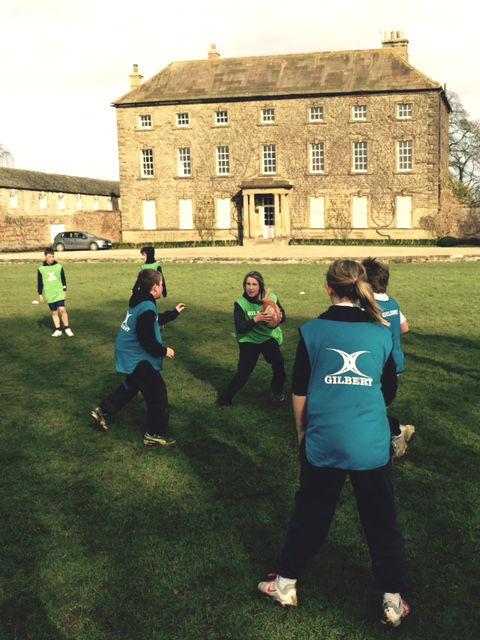
He was a fairly tall and extremely thin man, judging by his court suit which was kept by his sister, Mary Michell, in the family home of Crakehall Hall – the fabulous-looking property on the village green with the cricket pitch in front of it, near Bedale.
She gifted the suit to Thomas Lunn, the butler who had served the family for many decades and who lived in the grounds of the hall.
It is from the butler’s descendants that the waistcoat and trousers have been bought by vintage fashion enthusiast Donna King in Cornwall.
“As soon as I saw it, I could tell there was something very special about it,” she says. “It’s a lovely, well made smoking outfit, although there’s no smell of tobacco to it, although it definitely has been worn as there’s wear under the arms of the waistcoat.

“It is very slim fitting, silk velvet, with a high waistband, so very much of its time. It’s got the buckle on the back with his name on it and the date 1885, and the buttonholes are handstitched.
“The velvet is a deep red, almost with an orangey tint. It is quite long in the leg and narrow in the chest – it wouldn’t fit many modern men.”

The Garrett family had owned an estate in Kilgarron (or Coill Ghearráin, in Irish) in County Carlow, the second smallest county in Eire, since 1700. William Thomas Garrett, born in 1820, was a third son and made his own way in the world by becoming a clergyman.

In the 1850s, he seems to have been a curate at St John’s Church in East Witton, near Leyburn, before becoming vicar of St Gregory’s in Crakehall, a new church built in 1840 when a parish was created out of Bedale as the lower Wensleydale population grew.

Mr Garrett lived with his wife, Anne, the daughter of a successful Bradford worsted merchant, in Crakehall Hall with their three surviving children: Thomas, born 1851 in Bradford; Mary, born 1854, and John, born 1858, both of whom came into the world at East Witton vicarage.

The youngest, John, joined the 60th Regiment, the King’s Royal Rifles, but was killed on February 7, 1881, fighting at the Ngogo river in KwaZulu-Natal in the 1st Boer War – in the company he was commanding, only nine out of 70 men were not injured or killed. He was buried at Fort Amiel, where there is a large monument to the fallen, and a stained glass window was placed in East Witton church in his memory.


The daughter, Mary, made a very good marriage, tying the knot in Crakehall church in 1875 with John Michell, of Forcett Hall, near Richmond. Their wedding was extremely extravagant, with six days of festivities at Forcett being matched by similar celebrations in the Michell’s Glassel estate in Aberdeenshire.
Sadly, the marriage lasted only three years as John died aged 30 in 1878, and Mary moved back to the family home in Crakehall.

The third of the vicar’s children was Thomas, the owner of the court suit. He, too, went into the army, spending seven years with the 14th Hussars and then 12 years in the 16th (The Queen's) Lancers – known as the “Scarlet Lancers” as they were the only regiment permitted to wear red.
Judging by the date on the buckle of his suit, he had it made while he was in the Lancers.
In 1889, he retired and moved into diplomacy in Dublin, serving as aide-de-camp to successive Lord Lieutenants of Ireland (the monarch’s representative): the Marquess of Londonderry and the Earl of Zetland. It is conceivable that he already knew both men: Londonderry’s vast Durham coalfield was based at Seaham Hall while Zetland lived at Aske Hall, near Richmond.
He seems then to have returned to Crakehall and, when not wearing his suit to fancy functions, served the local community – in 1899, he signed an oath at Northallerton and became a Justice of the Peace.
But he didn’t settle down. In the North Yorkshire County Record Office, there’s a letter he sent from Naples on November 14, 1900, to Sir Henry Beresford-Peirse, of Bedale Hall.
Thomas was sailing on the latest German liner, the Prinzess Irene, and he told Sir Henry how he had met an officer who had been fighting in the Boer War with Sir Henry’s son, also Henry. The officer had told him how young Henry, 24, acquitted himself “quite wonderfully well” and “was a very gallant lad” (Henry won the Distinguished Service Order and was twice mentioned in despatches).
He finished his hurried letter, which is full of mistakes, by saying: “There no time for more but soon will see we are so far on our way.”
This may well have been his last letter home.
The Prinzess Irene was sailing through the Suez Canal to Yokohoma in Japan, but Thomas must have disembarked because, on December 9, 1900, he died in Cairo. He was 49.

His body was brought home and buried on the very edge of East Witton churchyard, next to a ha-ha. He lies next to his father, the vicar, who had died in 1884, and his mother, Anne, who had passed away in 1894.

And so widowed Mary was the only survivor of the family. With no children of her own, she lived out the rest of her days in Crakehall Hall, surrounded by servants – and her brother’s suit. She was the end of the line when she died in 1928, and passed on the £40,000 family fortune – worth £2.4m in today’s values, according to the Bank of England Inflation Calculator – to a cousin.
And the suit was passed onto the loyal butler.

“It is exquisite,” says Donna.
“I have managed to find photographs of Thomas’s father, his brother John in his Rifles uniform, and a wonderful shot of his sister Mary with her horse outside Crakehall Hall.
“However, despite having the very suit that Thomas wore in 1885, I have never seen a photograph of Thomas himself.
“I am appealing to the local community – perhaps descendants of Crakehall estate staff, local historians, or members of the Bedale Hunt – to see if a photograph of Thomas exists in a forgotten album.
“It would be a privilege to finally put a face to the man who wore the red velvet suit and to complete the record of this fine Yorkshire family.”
- If you have any information at all about any aspect of this story, and especially if you have a picture, please email chris.lloyd@nne.co.uk


Share